
Erika Baez-Grimes

When Erika Baez-Grimes tells me I should meet someone, my answer is simple: “When?” And during International Women’s Month, I’ve been thinking a lot about why that matters. Because Erika doesn’t just make introductions, she builds ecosystems. She has built a powerful reputation in business transactions. If you’re buying or selling, she’s the one people trust. But what stands out even more is how she’s built it: by leading with generosity. She gives first.She connects intentionally.And she makes people feel like they belong. You know how you meet someone and they instantly become part of your circle? That’s Erika. Through her, I’ve been introduced to an incredible network of women: leaders, builders, innovators. Women who, not long ago, were often the only ones in the room. That’s changing. And what I’m seeing now feels less like progress… and more like momentum. More women in leadership. More doors open. More voices at the table. And yes, sometimes it even feels like a party (…even though we have along way to go). But none of this happens in isolation. We are standing on the shoulders of women like Edie Fraser (one of the women Erika said I must meet) whose lifelong commitment to advancing women, especially in underrepresented communities, continues to shape what’s possible for the next generation. And for me, the real gift is this: Getting to know these women. 💛 Learning from them.💛 Laughing with them.💛 Building alongside them. I’m deeply grateful to be in the room, and even more grateful for the women who make room for others. hashtag#leadership hashtag#womeninleadership International Women’s ForumWhen Erika Baez-Grimes tells me I should meet someone, my answer is simple: “When?” And during International Women’s Month, I’ve been thinking a lot about why that matters. Because Erika doesn’t just make introductions, she builds ecosystems. She has built a powerful reputation in business transactions. If you’re buying or selling, she’s the one people trust. But what stands out even more is how she’s built it: by leading with generosity. She gives first.She connects intentionally.And she makes people feel like they belong. You know how you meet someone and they instantly become part of your circle? That’s Erika. Through her, I’ve been introduced to an incredible network of women: leaders, builders, innovators. Women who, not long ago, were often the only ones in the room. That’s changing. And what I’m seeing now feels less like progress… and more like momentum. More women in leadership. More doors open. More voices at the table. And yes, sometimes it even feels like a party (…even though we have along way to go). But none of this happens in isolation. We are standing on the shoulders of women like Edie Fraser (one of the women Erika said I must meet) whose lifelong commitment to advancing women, especially in underrepresented communities, continues to shape what’s possible for the next generation. And for me, the real gift is this: Getting to know these women. 💛 Learning from them.💛 Laughing with them.💛 Building alongside them. I’m deeply grateful to be in the room, and even more grateful for the women who make room for others. hashtag#leadership hashtag#womeninleadership International Women’s Forum
The Podcast Studio
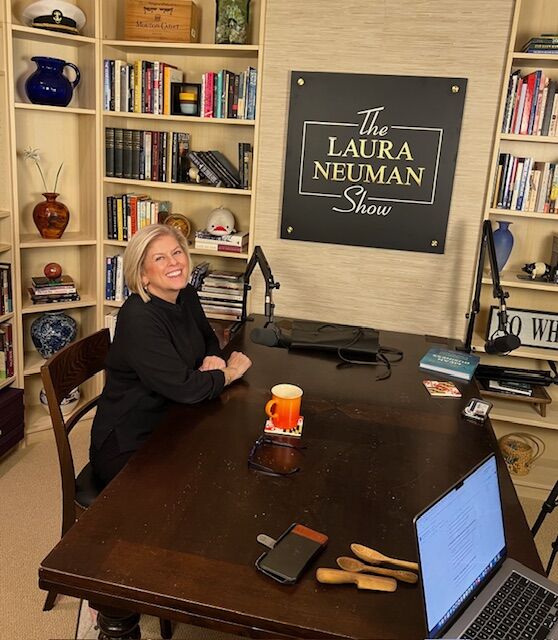
This week, we made it official. Over the past year, my son and I launched a podcast…and like most things worth doing, it didn’t start smoothly. We had false starts.The wrong microphone.The wrong location. At one point, I was convinced my home office would be perfect.It wasn’t. The lighting bounced off the glass on the walls. We filmed an episode, watched it, and grudgingly knew it wasn’t going to work. So we made a decision. We built a studio. (And to be clear—my son built it. I assisted.) Our dining room table became the centerpiece of interview set.The pool table moved to the dining room.We designed built-ins and created a custom backdrop. And then we hit a wall: branding and signage. After spending far too many hours trying to come up with the “perfect” podcast name, I let it go. Instead, I went back to something that was deeply personal. The brass letters from my time in public office. The ones that once hung outside my office. That’s when Gable Signs saved the day. They are a large, established company (that makes signs for stadiums and Starbucks) that took the time to help bring this vision to life. Paul Gable and his team transformed those letters into something beautiful, and even more meaningful: a timeless centerpiece for our studio.It’s more than signage. It’s a reminder of where I’ve been, and what we’re building. I will never look at it without being filled with gratitude that Paul and his team made this happen!! The podcast is live, and I’m incredibly proud of the conversations we’re having. And now it’s hitting socials. Our goal is to share stories of people who have been confronted with challenges and chose to hit it head-on! I’d love for you to check it out, subscribe, and share your thoughts. And if you’re building something of your own, don’t wait for perfect. If your goal is perfect, you’ll never get there! Start, and accept that you’ll figure it out along the way. hashtag#leadership Laura Neuman Show
Antoine Payne

I went into my first meeting with Antoine Payne skeptical. Very skeptical. I had invited him to be a guest on my podcast, and before we spoke, I knew one thing about him: He had spent several years in prison after shooting his ex and her mother multiple times (they both lived). I’ve been on the receiving end of violent crime. I have strong opinions about serial offenders and the damage they cause. But Antoine wasn’t a serial offender. He made one terrible decision that changed multiple lives forever, including his own. Still, I found myself wrestling with a difficult question: Can someone who committed a violent crime become a leader? I honestly didn’t know how I felt about that. It’s not a question we talk about very often in leadership circles. Then I met Antoine. He is one of the most thoughtful and intelligent people I’ve encountered in a long time. And then I attended his annual event, Chains to Change, where formerly incarcerated men share their stories of rebuilding their lives after prison. The men in these photos stood up and talked honestly about the worst decisions they had ever made, and what it took to turn their lives in a different direction. The stories were raw. Honest. Complicated. And they forced me to think about leadership in a different way. In leadership, we often talk about mindset, resilience, and perseverance. But redemption may be the harder concept. Because redemption requires us to believe something uncomfortable: That people are not defined only by the worst thing they’ve ever done. And that real change is possible. I’ll be sharing my conversation with Antoine on the podcast soon so you can form your own opinion. But after attending Chains to Change, I’ve been thinking about leadership differently. We often celebrate the people who succeed. But maybe we should also pay attention to the people who rebuild. Sometimes leadership isn’t about the path someone took to get here. Sometimes it’s about what they choose to do next. hashtag#leadership hashtag#redemption hashtag#resilience Laura Neuman Show
The First Time I Met Adam Rosenburg
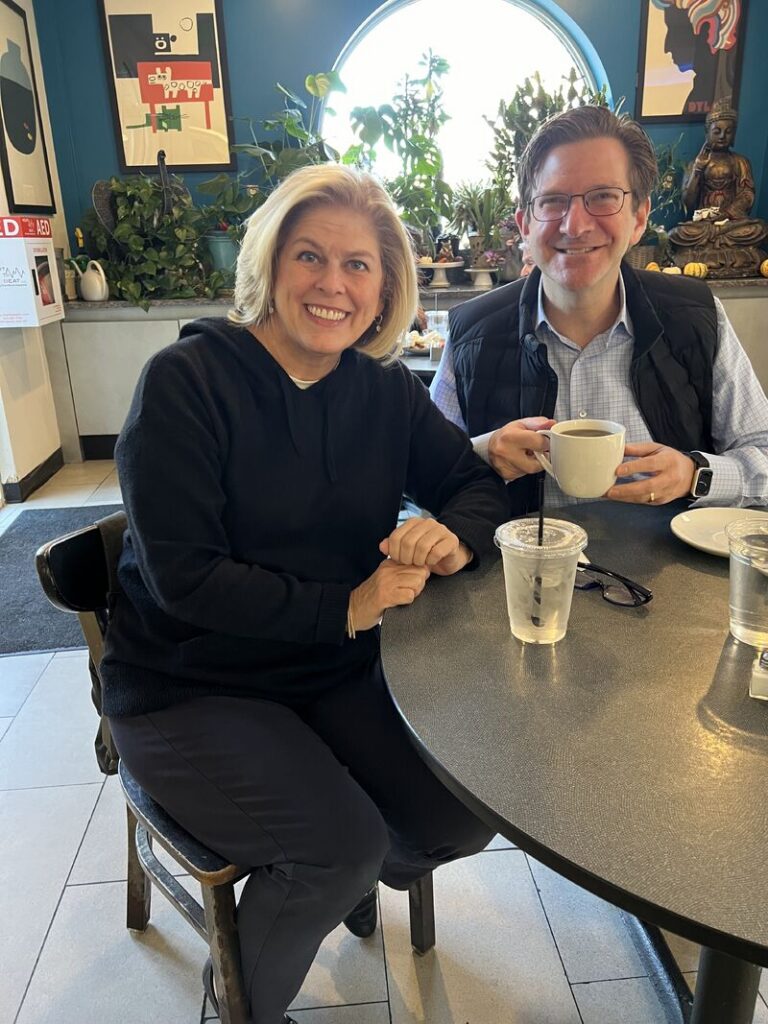
The first time I met Adam Rosenberg, I was facing one of the most consequential moments of my life. Almost two decades earlier, someone had tried to take away my freedom. Now he had been arrested, and I was being pulled into the criminal justice system: a complicated web of procedures, uncertainty, and delays. The system that had once silenced my voice was asking me to show up.As a witness.As a victim.As someone who might see justice. And if I’m being honest, it was terrifying. Adam was the prosecutor assigned to my case. His job was to secure a conviction. Mine was to show up prepared after years of being pushed aside. Despite an intense workload, he patiently answered my questions. At the time, I had no idea his commitment to public service was so genuine. The bad guy was ultimately convicted and went to prison. I moved forward with my life, finally feeling the freedom that comes with justice. Moments like that teach you something important about leadership: real change comes when it’s most difficult. Adam continued doing what he had always done: serving this community. When he became Executive Director of the Center for Hope, he asked me to join the board. I said yes immediately. One thing I didn’t grow up knowing is that many leaders give back to their communities through nonprofit board service. They bring their time, their expertise, and their resources to strengthen the institutions that support people in their hardest moments. For me, it has always felt like a gift to give back. Because the truth is, the ability to do so means you’ve been given something extraordinary along the way: a voice, resources, opportunity, sometimes even justice. It has been a true honor to support Adam’s work and to watch him build and grow an organization dedicated to helping victims and families find their way forward. I’ll admit there were moments when I wondered if the vision might outpace the resources. That’s the reality of nonprofit leadership. But when Adam said he wanted to bring the CFH into LifeBridge Health, he was right. In Neil M. Meltzer, he found a true partner. Through that partnership, I had the opportunity to attend LifeBridge Health’s annual meeting, the kind of gathering that is a who’s who of our region’s civic and business leadership. Growing up, I didn’t even know rooms like that existed, let alone that one day I might be invited into them. Since then, there have been leadership transitions. Neil has moved on from LifeBridge Health, and Hilary Corley, CFRE has taken on an exciting new opportunity after helping guide the Center for Hope through an important chapter. Through it all, Adam remains, continuing the work he has always done in service of this community. Recently, I stepped away from the board to focus my nonprofit work on organizations that support my sister Leslie. It feels a little like the end of an era. But Adam’s influence only continues to grow, changing and improving our community. hashtag#leadership
Turning Down a Great Job Offer

One of the most important career decisions I ever made was turning down a well-funded executive role to lead an insolvent start-up. The offer came from Tien Wong. It was 2000. And that decision defined my path as an entrepreneur.I still have the offer in my files. It was real. A serious opportunity. Tien was already a proven entrepreneur, building and leading successful technology companies with clarity and momentum. Being asked to step in as Executive Vice President was a big deal. And then I did something unexpected. I declined. Instead, I chose to bet on myself, cashing out my savings and retirement to build a company that had more risk than runway. No guaranteed salary. No infrastructure. No safety net. It was the harder path. But it was mine. What I didn’t fully understand at the time was this: Having that offer gave me the confidence to take the bigger risk. When someone credible sees your capability, it changes how you see yourself. Over the past 26 years, I’ve watched Tien do that for countless founders. As Chairman & CEO of Opus8, Inc. and founder of The Big Idea CONNECTpreneur Community, he hasn’t just built companies, he’s built an ecosystem. He creates rooms where investors meet entrepreneurs. Where ideas get oxygen. Where momentum begins. He’s a connector in the truest sense. Not transactional. Not loud. Just consistent. Our paths have taken different turns, but they continue to overlap. Companies scaled and exited. I built and raised capital. I stepped into public service.But the respect endured. The best professional relationships aren’t built on proximity.They’re built on time, trust, and mutual belief. I’m grateful that in 2000, he saw something in me. And I’m grateful I chose the risk. It was a joy to recently celebrate the Lunar New Year with Tien and friends, a reminder that the strongest professional relationships, when rooted in respect, become something more lasting. hashtag#leadershipActivate to view larger image,
William Webster Profiles in Leadership Honoree: Chuck Wexler
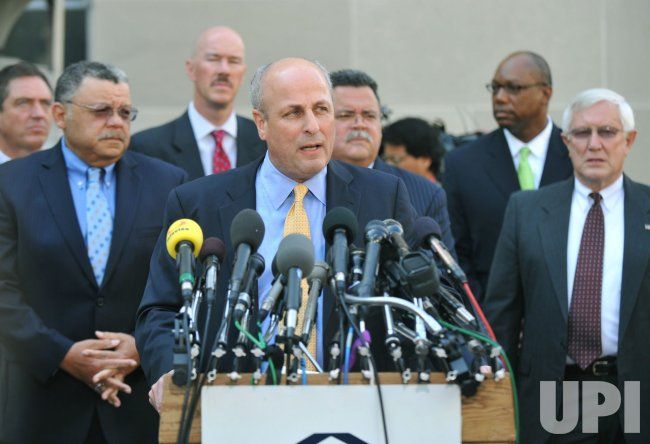
When you’ve had to lead a police department through crisis, your view of leadership changes. When I took office in 2013 as County Executive of Anne Arundel County, I inherited a department destabilized by scandal tied to the prior administration of John Leopold, and Police Chief James Teare. There had been leadership turnover. Allegations of wrongdoing. Public distrust. Internal morale challenges. Shortly after I took office, I requested the resignation of then-Chief Larry Tolliver amid accusations of racist and sexist slurs. It was clear the department needed more than a personnel change. It needed structural repair. We assembled a multi-jurisdictional task force led by former Baltimore Police Commissioner Fred Bealefeld to conduct an outside review and make recommendations. That process ultimately led to hiring Kevin Davis as chief, who would later lead major departments in Baltimore City and Fairfax County. I share this because leading a police department is not theoretical.It is complex.It is political.It is emotionally charged. And it demands leaders who prioritize standards over comfort. Which brings me to this week’s William Webster Profiles in Leadership honoree: Chuck Wexler. As Executive Director of the Police Executive Research Forum (PERF), Wexler has spent nearly three decades shaping national policing standards.He has led work on: • Modern use-of-force frameworks• De-escalation training protocols• Active shooter response standards• Officer wellness initiatives• Data-driven accountability models PERF reports have influenced departments across the country, often in the wake of national crises, when emotions run high and public trust is fragile. Wexler’s leadership is distinctive for three reasons: 1. He builds consensus across divides.In a profession often defensive under scrutiny, he convenes chiefs, researchers, and policymakers to move toward solutions rather than rhetoric. 2. He leads with evidence.Long before “evidence-based policy” became fashionable, Wexler pushed departments to adopt research, data, and measurable standards. 3. He strengthens leadership capacity.His work equips chiefs to lead through complexity, not just manage operations. From my experience, I know this:Character determines what you tolerate.Structure determines what endures. Chuck Wexler has dedicated his career to strengthening the structure of American policing, so that strong leaders can succeed and weak systems can be fixed. The William Webster Profiles in Leadership program continues because of the vision and stewardship of Lynn Mattice and Philip Niedermair “The price of Liberty is eternal vigilance.”, whose commitment to elevating principled public service keeps this conversation alive. In a field where scrutiny is constant and stakes are high, steady leadership like this is essential. hashtag#leadership hashtag#publicservice hashtag#WilliamWebsterProfilesinLeadership
Who Do You Trust?

Early in my career, work was my social life. There was real camaraderie as clients became friends. And colleagues became people I trusted. At the time, I didn’t think of this as leadership or networking. It was just shared careers and showing up for one another. Only later did I realize that’s how trust actually gets built. I went to Grateful Dead concerts, weddings, and even on vacations with people who started as colleagues or clients and became friends. I’m still close with people I met decades ago answering phones in the T. Rowe Price call center. What surprised me is that this didn’t end as my roles changed. As I moved into leadership, relationships shifted. You stop bonding over late nights and start paying attention to judgment, values, and whether or not the giving is mutual. That’s where alignment matters. This photo captures some of my favorite people as we show up for one another: Erika Baez-Grimes, John Yetman, and Tien Wong. We, along with Marco V. Ávila, P.E., were there for our dear friend Tien as he hosted another great entrepreneurial event. I’d go to the moon and back for these folks! Leadership is built on who you trust…and who trusts you back!
Live Fully
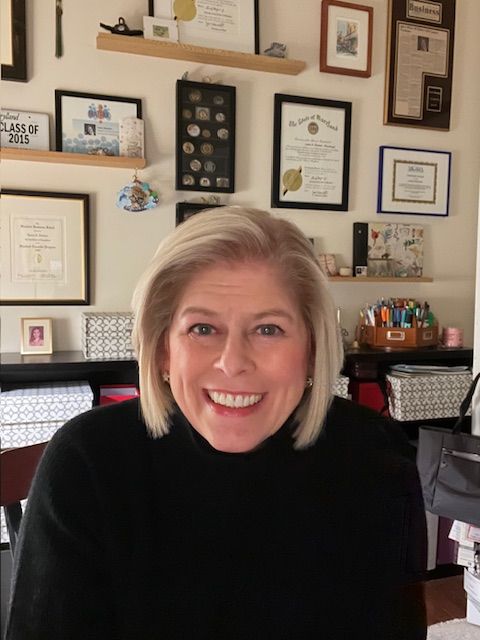
As I approach another birthday, I’ve realized there’s a point in your career/life when you’re planning in years, not decades, and experience is your greatest asset. That realization changes things. It changes what you tolerate.It changes which risks feel worth taking.It changes what you’re no longer willing to postpone. Many people look at me today and see success. What they don’t see, and what I think matters, is that the journey here was hard. Not abstractly hard. Practically hard. I lived out of my car as a teenager. I sacrificed, struggled, and worked through setbacks long before there was any visible momentum. For some of us, life didn’t suddenly get difficult. It always was. That perspective is missing from a lot of success advice. Much of it comes from people who started with safety, support, and a sense of belonging. Incredible accomplishments, yes, but not the same starting line. This year, I’m choosing to share my story and the lessons I learned along the way, more visibly. Not because I set out to build an audience.But because one honest post about a life lesson reached millions more people than I expected, and it made something clear to me. There are a lot of capable, driven people who think they’re behind, unsupported, or failing, when in reality they’re doing something far harder. They’re building without a net. One question has guided many of my decisions, especially when fear was loud: What will I wish I had done? That question has led me to choices that felt exposed, uncertain, and deeply human, and almost always to growth. As I step into this next (birthday) year, a few things feel non-negotiable: 🎂 Don’t delay the things that bring real joy. 🎂 Slow down when stress goes up. 🎂 Invest in people. Life is better with them in it. 🎂 Seek balance where connection energizes you and solitude restores you. I’m looking forward. This year, I finally put my story into a draft manuscript. Not because it’s finished, but because it deserves to exist. I want to write the book I wish I had been able to read. Life isn’t linear. It doesn’t unfold the way we planned. But we still get to choose whether we live it cautiously or fully. Live fully. hashtag#BirthdayPost
Real Leadership
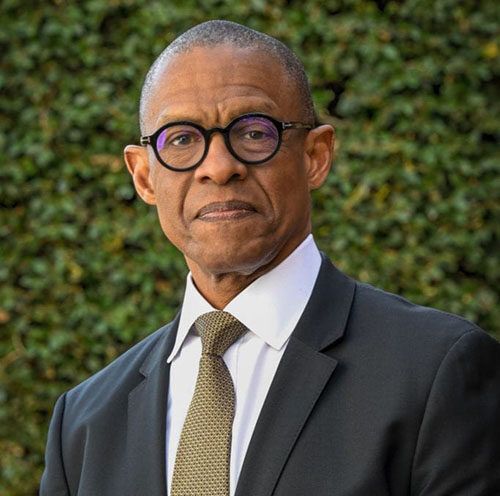
Real leadership means showing up in moments of crisis.The best leadership shows up long before. That’s the kind of leadership recognized by the William Webster Profiles in Leadership. If you’ve been following along, thank you. We’re 8 of 9 into the series, and it’s been meaningful to slow down and really reflect on what public service leadership looks like in practice. Today, I’m honored to recognize Dr. Erroll G. Southers, who received special recognition for Law Enforcement, State, Local, Tribal, and Territorial service. Erroll’s career spans every level of public safety, from local policing to federal counter-terrorism, from operational leadership to academic instruction. He started as a police officer, has served as an FBI Special Agent and SWAT team member, a senior homeland security official, and a nationally respected expert in counter-terrorism and transportation security. What makes his story especially compelling is the breadth of trust placed in him, across administrations and political lines. He was President Barack Obama’s first nominee to lead the Transportation Security Administration, and earlier was appointed by Governor Arnold Schwarzenegger as Deputy Director for Critical Infrastructure for the California Office of Homeland Security. Today, Erroll serves as Associate Senior Vice President for Safety and Risk Assurance at University of Southern California and as a Professor of the Practice in National and Homeland Security, responsible not only for keeping a major university safe, but for preparing the next generation of leaders to think clearly, act responsibly, and lead with integrity. He is also the author of Homegrown Violent Extremism and Inside the Castle Walls (just released), reflecting his long-standing focus on prevention, preparedness, and the evolving nature of public safety threats. Not the titles, but the throughline stands out: a steady commitment to protecting people while strengthening public trust. Erroll’s career reflects what I believe defines great leadership: service that adapts, endures, and never loses sight of the people it’s meant to protect. This recognition exists because of Lynn Mattice, whose vision created the William Webster Profiles in Leadership Awards, a program that honors public servants who carry enormous responsibility with humility and purpose. The awards are named for William Webster, whose lifetime of service set a lasting standard for integrity, accountability, and devotion to country. And my thanks to Philip Niedermair “The price of Liberty is eternal vigilance.” for the invitation to be part of this ceremony. With one profile left, I keep coming back to the same thought: To serve is an honor, and leadership requires showing up prepared and ready to accept responsibility. hashtag#leadership hashtag#publicservice hashtag#WilliamWebsterProfilesinLeadership
Purpose Driven Leadership

A lot of people took to the podium on March 26, 2024. But in the days that followed, leadership showed up where it mattered most. Out of view. When a massive container ship struck and collapsed the Francis Scott Key Bridge, the Port Of Baltimore, a critical hub of American commerce, came to a grinding halt. In an instant, the supply chain in Maryland and across the eastern seaboard shifted. Autos.Heavy equipment.Defense logistics. Thousands of workers whose livelihoods depend on constant flow. Billions in economic activity suddenly at risk. This was not just an infrastructure failure.It was a national logistics crisis with real economic consequences. While cameras rolled and public statements were delivered, a different kind of leadership went to work. Quietly. Immediately. Relentlessly. At the center of that effort was Scott Spellmon, then Chief of Engineers and Commanding General of the US Army Corps of Engineers, responsible for restoring safety, navigability, and confidence under extreme pressure. He led the unified effort to clear the channel, coordinate across agencies, and move with urgency without sacrificing safety. This is command leadership at its highest level. ✔️ Calm under pressure✔️ Precision amid chaos✔️ Execution over optics✔️ Accountability without applause The work was complex and dangerous. Debris removal. Channel clearance. Worker safety. Coordination across federal, state, local, and private sector partners. All with no margin for error and no time to waste. Most people will never see how close systems like this come to failure. I know how quickly disruptions ripple, because I built a company in the supply chain management space. They will also never see how much depends on leaders who do not step into the spotlight, but step forward when it matters most. This is the 7th post in my series recognizing William Webster Profiles in Leadership honorees, leaders who embody integrity, service, and responsibility under extraordinary circumstances. I also want to continue recognizing Lynn Mattice, whose vision and commitment made this awards program possible and whose leadership ensures these stories are told. And thank Philip Niedermair “The price of Liberty is eternal vigilance.” for the invitation to this wonderful event. Real leadership is not always visible. But its impact is undeniable. hashtag#Leadership hashtag#PublicService hashtag#NationalSecurity hashtag#WilliamWebsterLeadership