
Bet On Yourself

#BetOnYourself. For me, this meant cashing in my savings (including my 401k) to pay my bills, and paying my mortgage on a credit card…so that I could run a start-up that had more debt than cash. Building a company requires big-time risk. The decision I made to take this risk happened for a few key reasons: 1. I know what I have to offer – I believe in my ability and if I say I’m going to do something, I’ll get it done. 2. The path to leadership is not an equal opportunity endeavor – I was unlikely to be promoted into leadership because I didn’t check the typical boxes. 3. I trusted myself to know this was a good idea – many years of struggle helped me hone my instinct for survival, which is the underpinning of success. 4. One of the founders was willing to do “whatever it takes” – we didn’t always agree, but we were in agreement on the commitment necessary to succeed. There were challenges. One of the founders flat-out said he would not work for a woman. Big stumbling block. Financial decisions were made before I arrived that put us in debt right out of the gate. One of the founders (same one) didn’t understand the risk of protecting the IP and a presentation he did led to creating an unnecessary competitor. My unconventional background was viewed as a liability in the traditional business setting when, in fact, it was an asset. Living out of my car, struggling to buy food and pay rent, and surviving unspeakable challenges prepared me to succeed as an entrepreneur. No safety net = high level of motivation. This is me presenting my company to the Capital Investors, a who’s who of the early internet boom. This was in the book The Dinner Club by Shannon Henry Kleiber. hashtag#entrepreneur hashtag#entrepreneurship hashtag#leadership hashtag#LinkedIn
Slide Deck Masterclass
Every week, I mentor students and faculty at University of Maryland who want to be entrepreneurs. I’ve probably done hundreds of slide deck reviews in my career…and I have opinions. Here are a few (add an extra slide where needed): Slide #1: The first slide should be clean, include your company logo and/or name, and the name and title of the presenter. If you have an awesome tagline, include it. Otherwise, skip it. The purpose of this slide is to center the attention on you, to indicate you’re ready to go. Slide #2: Next, and absolutely most important, this slide is for the problem you are solving…not your product, not your bio. I need you to think big here. I’m looking for a global problem. For example, if you have a new app for teaching vocabulary to resistant-learners, the problem isn’t how to teach vocabulary, it’s changing how we think about education delivery. Slide #3: How do you plan to solve that problem? If you haven’t inspired your audience by this point, you’ll have a hard time getting them to look away from their phone. Slide #4: It’s finally here! This is your product slide. Include a demo or an explanation, benefits are good too. Slide #5: Cool stuff goes here. Patents, unique market data, key partnerships and clients. If you don’t have enough data points, it’s always interesting to see a sample customer ROI, outlining how your product can save/make them money. Slide #6: Include specific and relevant market data. Do not throw out a giant number for an addressable market without giving real context, unless you want them to look at their phone. Feel free to switch 5 and 6. Slide #7: Financials. Everyone has the hockey stick. Surprise your audience with an understanding of the assumptions that go into building financial projections for your business. Slide #8: Use of Funds/Raise. When I was raising $100 million for a venture, in a packed boardroom, I was asked how much I needed. I said the number without flinching. I asked the Chair later why he asked that question when he already knew the answer. His response, “I wanted to see if you could make the ask.” Slide #9: Team. I know what you’re thinking…it’s all about execution, shouldn’t this be further up? You’re right, but they’ve probably checked you out on LinkedIn. Assemble the photos and mini-bios in a way that is easy to read. This isn’t the area for creativity. Slide #10: Please do not forget to say thank you. This needs its own slide. Their time is valuable and you don’t want to miss the opportunity to express your appreciation. No need for a recap. Just a slide to let them know you’re here for it! Most first presentations are 10-12 max. Definitely have hidden content-heavy back-up slides for due diligence questions. You might’ve noticed I didn’t include a competition slide. I know I’m going against conventional wisdom here, but if you haven’t created differentiation from you’re competitors in slide 2 or 3, you haven’t delivered the presentation. #entrepreneur
Adventures with Leslie: First Time for Everything
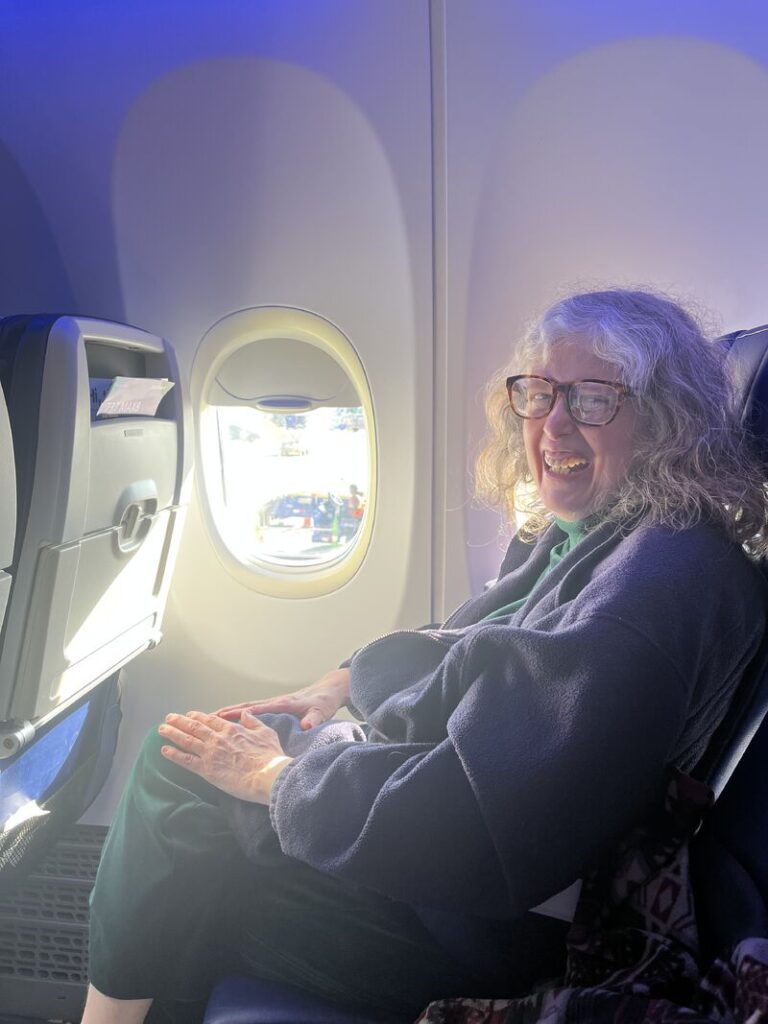
Adventures with Leslie If you’re wondering if it’s too late, you’re too tired, or too set in your ways to try something new, consider this: When Leslie came to my house sixteen months ago, she was taking the stairs on all fours. Today, at sixty-one, she took her very first flight. Over the last year, you’ve joined me on this journey of Leslie having many firsts, demonstrating extraordinary resilience: > first identification card> first time she said “I love you”> first time taking MTA Mobility> first time using an iPad> first time making decisions about what she enjoys All of this change has not been easy for her…in fact, it’s been very difficult, despite her persistent smile. When we started the conversation about flying several months ago, she said, “NO!” …in all CAPS. Today she is all smiles as she flies to New Mexico for a little time with other family members! I hope Leslie’s determination and joyful smile bring you a smile during this week of thanks!! hashtag#resilience hashtag#determination hashtag#gratitude
Adventures with Leslie: Update
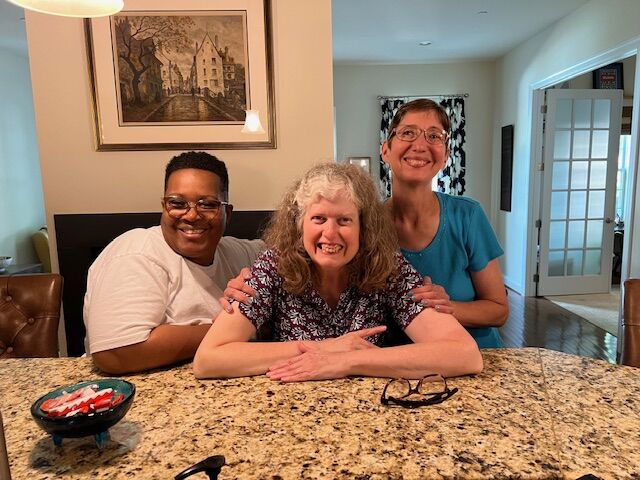
Adventures with Leslie So many of you have asked about Leslie and I’m happy to share this update! She has so much to teach all of us! At sixty-one, Leslie has had many new adventures this summer: she’s been to Deep Creek with roommates, had her first-ever pedicure, visited HersheyPark, started doing her own laundry (thanks, Marlene) and signed up for Spirit Club, a social program for the differently-abled. She comes to my house for dinner regularly, and she brought a friend, along with Marlene, the best residential manager ever! Every time I make dinner for Leslie, I ask, “How is it?” And EVERY time, she replies, “I love it.” I haven’t heard that since I took my kids to Chuck E Cheese the first time. No matter how many new things she tries, she still most enjoys being with anyone in her family, and most of the time that’s me. I try to be creative in coming up with ways to spend the time together but the truth is that we could just sit and watch the news and she’d be happy. I recently joined her Wednesday night bingo game. I got to call the numbers and, during a gripping game where it took two dozen numbers to call a winner, I noticed her water bottle was looking a bit ragged. “Leslie, how about we get you a new water bottle.” “No, it’s fine,” she said. “But it looks like it’s falling apart.” I replied…it’s covered with dents and the dishwasher has taken a toll. “It’s fine.” Ok, case closed. I had a call the next day from Leslie letting me know I left MY water bottle at her house. It’s a Stanley that was a birthday gift from my son, chosen to color-match the interior of my car. “Laura. You left your water bottle here. Can. I. use. It.” “Yes,” I said. “But you told me you don’t need a new water bottle. “I don’t. Can I use this one.” Connection. More important than a water bottle. ❤️ Richcroft Inc Stanley 1913 hashtag#community
Adventures with Leslie: Sunglasses
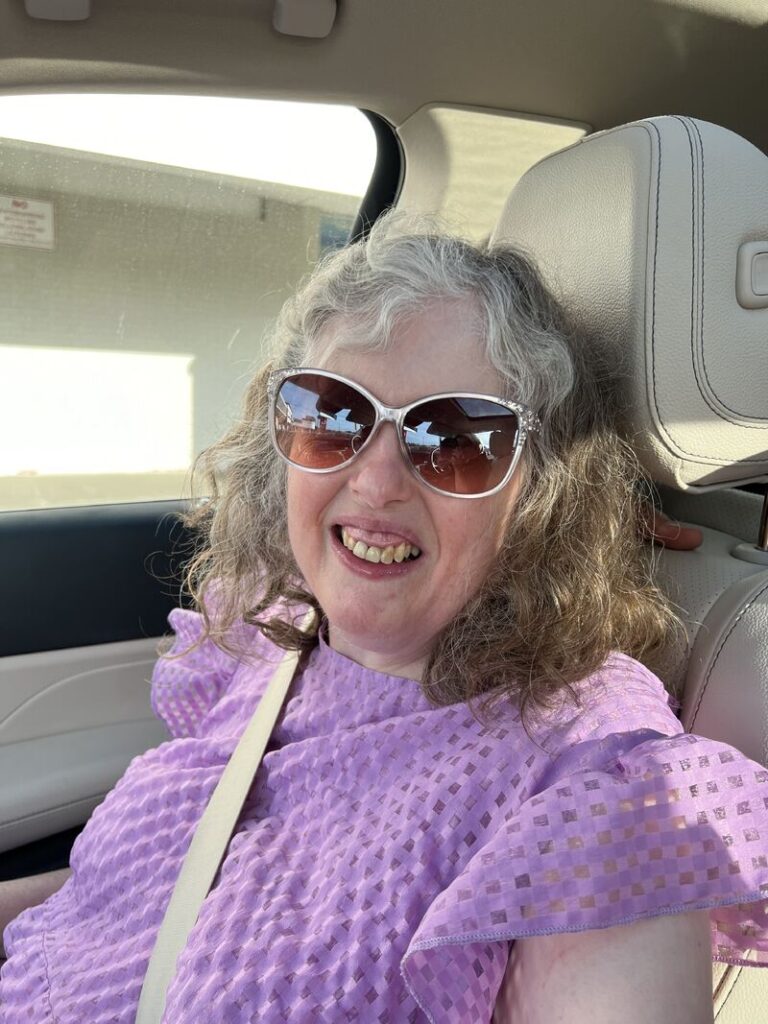
“Laura. I need you to come and get me. I need sunglasses.” I thought this was just a ploy from Leslie to get me to visit her. I hadn’t been able to drive for six weeks and she wasn’t having it anymore. She wanted to come to my house and take care of me. When she couldn’t do that, she reverted to something she knew would work – a request. A new one. Never did I imagine Leslie asking for sunglasses. She barely set foot outside for decades. Leslie is in a great program. In the last few weeks, she’s been to the Great Blacks in Wax Museum, Hershey Park, and Toby’s Dinner Theatre. It’s a full life. But there is no substitute for the joy Leslie experiences in her family relationships. Every single person who regularly interacts with her, including her Direct Service Providers, is family to her. They are what she talks about. “Which rides did you ride at HersheyPark,” I asked. “The monorail. Laura, Conrad took a cruise. You should call him and talk about it.” And then she’d tell me about Conrad’s trip. Conrad works at her day program. Leslie’s joy is in being connected to family, and for her that includes community. She enjoys the other activities but it’s connection that matters most to her. That’s why I invited every member of our family to her recent birthday party. It was the first time she has been celebrated in years. I ordered pizza, dozens of balloons, and we made a cake. In our family, we always make our own cake – even if it’s from a box. Decorating it is half the fun. Family members who’ve barely spoken to each other in years all celebrated and smiled together. That’s the power of Leslie and of the special people like her in our community. They love everyone. I get big hugs from her roommates every time I visit. It’s lovely. hashtag#Community hashtag#Connection
Problem Solving
🚨 True story from Detroit — I asked three different twenty-somethings for directions to a restaurant two blocks away!Google Maps was spinning because of the tall buildings, so I figured I’d ask a human.Not one could help. Not even close. It hit me like a brick: we’re facing a crisis of resourcefulness.And it’s going to cost us—big time. Problem-solving, critical thinking, follow-through—these aren’t just “nice to haves.” They’re career-defining skills. They’re what fast-track employees have that others don’t. So, I’ve made it my mission to teach these skills to my kids. At our house, the rule is simple: each of my kids pays half their college tuition.Sounds tough? It is. That’s the point(I’m not as mean as I sound – they had a phenom k-12 and any scholarships go to their half first 😊). Here’s how my son handled it: 📍 Private college. Full room and board. Max meal plan.📍 He owed about $5,000 each term (after merit scholarship).📍 Instead of using his summer job money, he took out a loan—on the last day, with zero research.📍 The interest rate? 12.65%. 😳 That’s $1,700 in interest before even touching the principal. I didn’t fix it for him. I sent him back. He had to:🔍 Dig deeper📄 Research the FAFSA💡 Discover he qualified for a federal loan at half the rate🏦 Cancel the first loan✅ Follow through and pay the bill That’s resourcefulness in action.And it’s exactly what the workforce—and the world—needs right now. 🛠️ We don’t need more instructions.We need more people who can figure it out. And, yes, while the system for paying for college is broken, he needed to work with what is available to him.
Resourcefulness
My first job as CEO came with zero salary.I had to raise money not just for myself — but for the whole founding team. That wasn’t the plan. I’d dreamed of Apple. Microsoft. IBM.But those companies weren’t looking for someone who was waiting tables instead of going to college. (I did get an MBA later – without college – but it didn’t sway them) What I didn’t know:While I was refilling coffee and memorizing orders, I was building something powerful. ✅ Executive functioning✅ Emotional intelligence✅ Grit But there was one skill that made the biggest difference — and hardly anyone talks about it: 👇 RESOURCEFULNESS 👇 It’s not: ❌ Funding❌ Fancy résumés❌ Prestigious connections It’s the ability to figure things out when nothing goes to plan.And the good news? You can train it. In the age of AI and instant answers, we’ve confused access to info with ability to solve real problems. But the most powerful search engine?Your own brain. Here’s what real resourcefulness looks like:✔️ Trusting yourself when the path isn’t clear✔️ Trying again — even after failing publicly✔️ Staying calm when plans blow up✔️ Asking better questions✔️ Adapting faster than your fear This is how humans survived before Google, GPS, or ChatGPT. Today, it’s a superpower — and one of the most undervalued leadership skills there is. 💡 Want to build your resourcefulness muscle? Try this: 🎯 Learn a new sport or hobby🤝 Go to an event where you know no one📺 Watch the news channel you disagree with🛑 Don’t buy anything new for a week Confidence comes from trying.Resilience comes from discomfort. Resourcefulness? It’ll set you apart in a world of shortcuts.
Equity
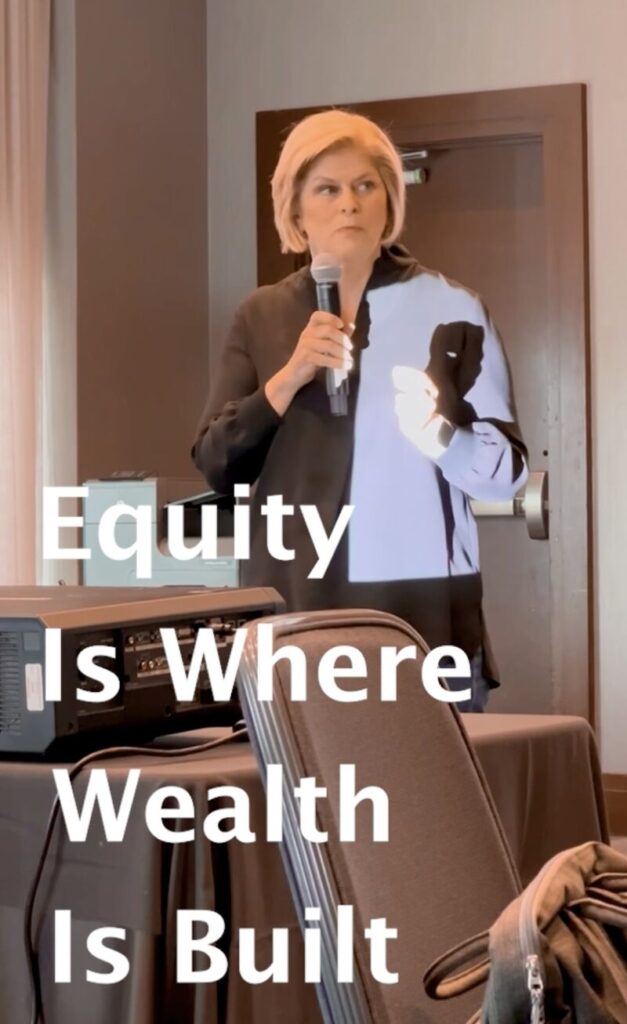
I almost left a negative comment on a recent VC advice post. Something I usually don’t do. The author insisted that founders should “lay down the law” on what terms are acceptable from investors. Bold take. Misleading too. Here’s the truth: If it’s your first round, and they have the money—you’re not dictating terms (there are rare exceptions, keyword: rare). Raising venture capital isn’t just a negotiation—it’s a relationship. And it’s not symmetrical. I once had an investor call me 17 times in one day—while I was hosting a summer cookout with my team—because I hadn’t closed the next round. Pressure? Yep. Helpful? Nope. Here are a few truths I learned the hard way: ✅ The right investor is your partner, not just your ATM.If they can’t stomach risk, they’ll micromanage your every move. The right investor will be here for it – and bring clear value. ✅ Not all money is equal.I once took a bridge loan to make payroll. My lead investor was furious—not just because I got leverage as they dragged their feet on closing the round, but because they didn’t consider the investor in the same league. Do what’s best for your company. ✅ Term sheets are not infinitely flexible.The best way to negotiate one? Have another. Tip: Keep interested parties separate unless they are building a syndicate. ✅ Don’t raise when desperate.They will see your numbers. A shaky balance sheet weakens your position and removes any leverage. Plan for min 6-12 months in runway. ✅ Fundraising is sales. Treat it that way.Segment investors just like you do customers: hot, warm, cold. Follow up. Personalize. Don’t spray updates and pray. The VC game is nuanced. It’s more art than science—and always about strategic control. Remember: You don’t control the money – until you do.
Location Matters

One of the most valuable lessons I’ve learned in both business and life is that location matters. When I was 21, I landed my first job that wasn’t as a waitress, cashier, or in retail. I became a call center rep for a company I had never heard of growing up: T. Rowe Price. On my first day at 100 East Pratt Street, sitting in the call center answering phones, I knew I had found my calling – business. I felt at home, even as I was starting at the bottom. It was just a few miles away from where I grew up on a street in a redlined neighborhood in Baltimore City. It was a different world. People in my community didn’t talk about working at a financial services firm. My childhood mentor, at nine years old, taught me how to shoplift a swimsuit (though I didn’t follow through) and how to sneak into the public pool after hours. By fifteen, she was on welfare. Yet here I was, in an office with people in suits, discussing the stock market. It wasn’t just a job – it was a window into what was possible. Although I didn’t climb the corporate ladder there, it gave me a glimpse of a world I hadn’t known existed. That’s why I wanted my current cohort of Maryland Business Opportunity Center (MBOC) entrepreneurs to experience something similar – a beautiful office space that reflects the success they can achieve. They’re underrepresented in the business community, but part of climbing the ladder is feeling like you belong. A big thank you to COPT Defense Properties for making this vision a reality! And a special thanks to Lawrence Twele CEcD for making the connect. Not only did COPT provide an incredible space, but they also did so free of charge. It took some time to work out the details – special thanks to Omoré at MBOC for helping with that process – but the support from COPT, including CEO Stephen Budorick who was quick to say yes, and VP Krysta Herring who handled the details, was truly outstanding. COPT is a great example of community leadership. They understand the power of building an ecosystem and giving back. Let’s continue to support and invest in anyone who has the courage to follow their entrepreneurial dreams. Thank you, COPT, for being a partner in real change!
MBOC Annual Showcase and Pitch Competition
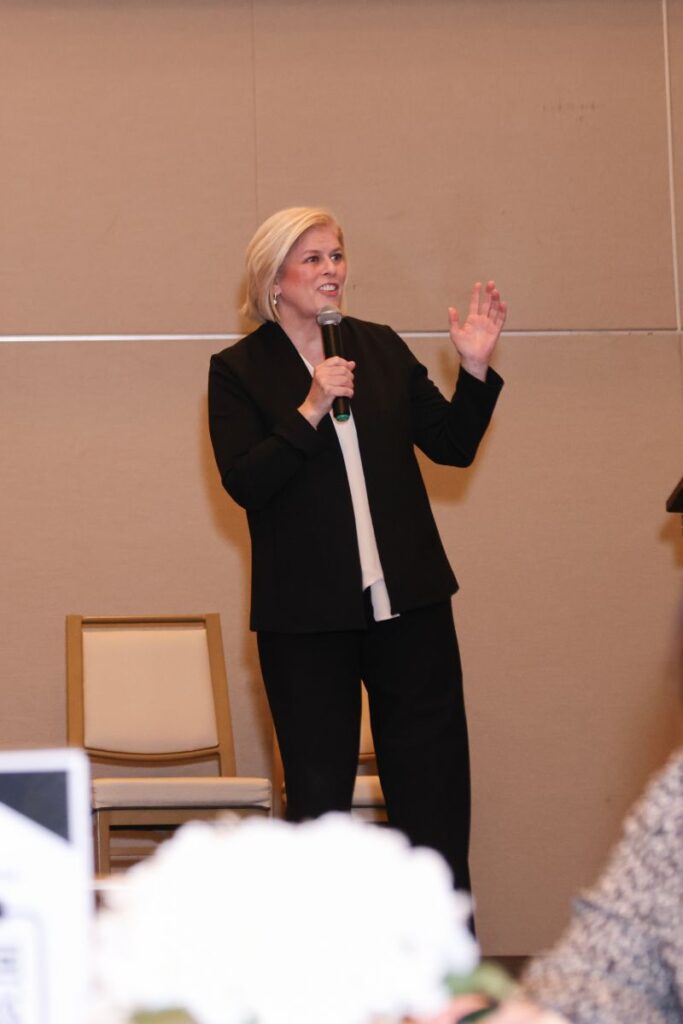
ummm…I think…you know… I had the honor of giving the keynote at the Maryland Business Opportunity Center (MBOC) Annual Showcase and Pitch Competition, where six amazing companies were selected to showcase their business ideas. If I’m being honest, every single one of the entrepreneurs in this cohort (~12) could’ve delivered a great presentation. But here’s the thing: no one’s immune to nerves. I shared with the entrepreneurs: “Everyone gets nervous. And that’s okay.” It’s true! Even the most experienced speakers have moments where they wish they’d said something differently…or remembered something afterwards they wanted to say. Just ask anyone who’s stepped onto a stage! One of the presenters had a technical glitch with his slideshow. The video wouldn’t play—but he handled it like a pro. 💪 It happens! And the filler words…let’s talk about those little transitions we all use… After hearing a prominent person on TV yesterday say “I think” 20x in 5 minutes, I was reminded of the importance of self-awareness. ✨ So, here’s a pro tip: Record yourself, then watch it. You’ll catch the habits you didn’t even know you had! 💡 For me, it’s “you know”…at least that’s what my podcast manager (and son) had to say…Ouch! But we’re all growing, right? Here’s what I’ve learned over the years about presenting on stage, even when you’re feeling nervous: 🔹 Acknowledge the nerves: They’re normal! Even seasoned speakers feel them. Stepping out of your comfort zone means you’re strong! 🔹 Focus on your message: Shift your focus to the fact that you know this content. No one knows it better than you. 🔹 Practice makes perfect: The more you practice, the less it feels like memorizing…and the less you have to rely on notes. 🔹 Don’t fear the glitches: Whether it’s a technical issue or a forgotten line, roll with it. The audience appreciates how you handle the bumps. 🔹 Slow down: Consciously slow down your pace…and take pauses to let your message sink in. 🔹 Visualize success: Before you step on stage, take a moment to picture yourself succeeding—it’s a powerful mindset shift! 🔹 Learn from every experience: Reflect after each presentation—what went well, and what could be better? We’re all learning, improving, and growing! I wrapped up my speech by celebrating the incredible people I’ve had the privilege of working with. Check them out—these entrepreneurs are the real deal! And a shout-out to the amazing MBOC staff: Virginia Dinzey-Taveras, MBA | Niani McDonald | Jada Riley | Jasmine Simms